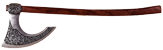
Eric "the Victorious" Segersäll
Eric "the Victorious" Segersäll was the first historically verified King of Sweden, a skilled military leader, and a significant figure in the transition from the Viking Age to a more unified Swedish kingdom. His epithet, Segersäll (blessed with victory or victorious), was earned after his triumph in a major battle.
Description and Key Achievements
Unifying Ruler: Eric is primarily known for unifying the main regions of Sweden—Svealand, Västergötland, and Östergötland—laying the groundwork for the modern Swedish nation.
Military Strategist: He was a formidable warrior and strategist. His most famous victory was the Battle of Fýrisvellir (near modern Uppsala) around 985 AD, where he defeated an invasion force led by his rebellious nephew, Styrbjörn the Strong. According to sagas, he sacrificed to the god Odin to secure his victory, promising himself to the god in ten years.
Expansionist: After defeating Styrbjörn, Eric invaded Denmark, defeated King Sweyn Forkbeard, and likely ruled over both Sweden and Denmark until his death.
Political Innovator: He introduced a system of universal conscription (known as ledung) in the Mälaren provinces and is likely the founder of the town of Sigtuna, where the first Swedish coins were later minted by his son.
Religious Flexibility: Eric was a figure of the transitional period between Old Norse beliefs and Christianity. He was reportedly baptized in Denmark but reverted to paganism upon returning to Sweden.
Legacy: Eric the Victorious's reign (c. 970–995 CE) marked a shift towards a more centralized authority in Scandinavia. He established a strong precedent for the Swedish monarchy and solidified a framework for a unified kingdom. His son and successor was Olof Skötkonung, the first Swedish king to remain Christian. His story, documented in Norse sagas and chronicles like those of Adam of Bremen, blends historical facts with legendary elements, symbolizing strength and transformative leadership in Viking history.\